
Artificial intelligence, data integration, and personalized services are transforming the relationship between governments and citizens. An international discussion in Barcelona highlighted how this transformation can also lead to better working conditions for public employees.
 Digital transformation in government is entering a new phase. Beyond making services available online or replacing paper documents with electronic processes, the challenge now is to leverage data, artificial intelligence, and integrated technologies to deliver simpler, more efficient, and more personalized public services.
This was the central theme of “Delivering Personalised City Services for Residents,” a roundtable organized by SmartCitiesWorld, which I had the opportunity to attend by invitation on November 3, during the Smart City Expo World Congress 2026 in Barcelona.
The meeting followed a distinctive format: an exclusive, closed-door strategic session with limited places and participants selected by the organizers. It brought together government representatives and international experts, including participants from cities such as Rome, Dublin, Glasgow, Manchester, and Prague, among others.
Rather than simply showcasing technological solutions, the format encouraged in-depth discussions in which participants shared initiatives, experiences, and challenges faced in their respective cities.
The conversations addressed practical aspects of implementation, systems integration, data governance and protection, digital inclusion, and the balance between automation and human interaction.
Abu Dhabi: When Government Starts Operating as an Integrated System
One of the most compelling experiences presented was that of Abu Dhabi, in the United Arab Emirates, through its TAMM government services platform.
Before its implementation, residents had to navigate more than 220 applications and websites, as well as multiple service centers and call centers, to access services provided by different government agencies.
The solution went far beyond bringing everything together into a single application. Government processes were redesigned to eliminate unnecessary steps, repeated document requests, and barriers between departments.
The results presented were impressive:
– 4.9 million users;
– More than 1,200 integrated services;
– 480 million interactions;
– 94.5% user satisfaction.
Artificial intelligence is already being used to guide residents, simplify procedures, and automate certain operations. One example presented was the reduction in vehicle registration renewal time from approximately 19 minutes to just 5 minutes.
Another significant indicator: according to those responsible for the platform, 98% of users who interacted with the AI assistant were able to obtain the information they needed without requiring human assistance.
The most important lesson lies not only in these figures but in the underlying shift in approach: instead of expecting citizens to understand how government is structured, government organizes its services around citizens’ needs.
Seoul and the Evolution Toward Proactive Public Services
Another interesting experience came from Seoul, South Korea, which has been developing services organized around what are known as life events.
The concept is simple yet transformative: events such as the birth of a child can automatically trigger integrated public procedures and benefits, reducing the need for repeated applications.
The discussion also explored initiatives that use data to proactively identify vulnerable families and offer support even before a formal request is submitted.
This approach represents an important shift: government moves beyond responding exclusively to requests and becomes capable of anticipating needs and delivering services proactively.
Naturally, such a model requires particular attention to privacy, information security, and responsible personal data management.
Technology Must Also Benefit Public Employees
One aspect I consider fundamental to this transformation is that its benefits should not be limited to citizens.
Modernizing public services must also improve working conditions for public employees by providing more efficient tools, faster access to reliable information, and a reduction in bureaucratic and repetitive tasks.
Artificial intelligence can support information analysis, provide procedural guidance, facilitate communication between departments, and enable professionals to focus their efforts on activities that require expertise, human judgment, and personal attention.
The goal is not simply to replace human tasks with technology, but to enhance public employees’ ability to deliver high-quality services.
Another important takeaway from the meeting was that this evolution does not necessarily require the immediate replacement of every existing system. Interoperability technologies and artificial intelligence can enable gradual progress by connecting platforms and progressively improving processes.
This perspective is particularly relevant for municipal governments that must balance innovation with budget constraints, legacy systems, and varying levels of technological maturity.
The Challenge of Turning Knowledge into Results
Exchanging experiences with representatives from different cities demonstrated that, despite economic, cultural, and administrative differences, many of the challenges governments face are remarkably similar.
Technology offers extraordinary opportunities, but successful implementation requires planning, governance, workforce development, and, above all, a willingness to rethink traditional processes and service delivery models.
The international experience also reinforced a conviction I have developed throughout my professional career, both in technology business management and, more recently, in public administration: innovation only creates real value when it translates into tangible results for people.
For Poços de Caldas, these experiences provide valuable references, not as models to be simply replicated, but as opportunities to identify solutions that can be adapted to our local reality.
Together with Mayor Paulo Ney, Deputy Mayor Eduardo Januzzi, and the entire municipal administration team, our goal is to evaluate these possibilities and work toward implementing, responsibly and sustainably, solutions that are technically feasible, economically sound, and capable of improving both the services delivered to residents and the working conditions of municipal employees.
The future of public administration will not be defined solely by the number of technologies available, but by the ability to use them to simplify processes, integrate services, empower people, and deliver better outcomes.
 After all, a smart city is not simply one that uses more technology, but one that successfully transforms innovation into better services and a higher quality of life for its citizens.
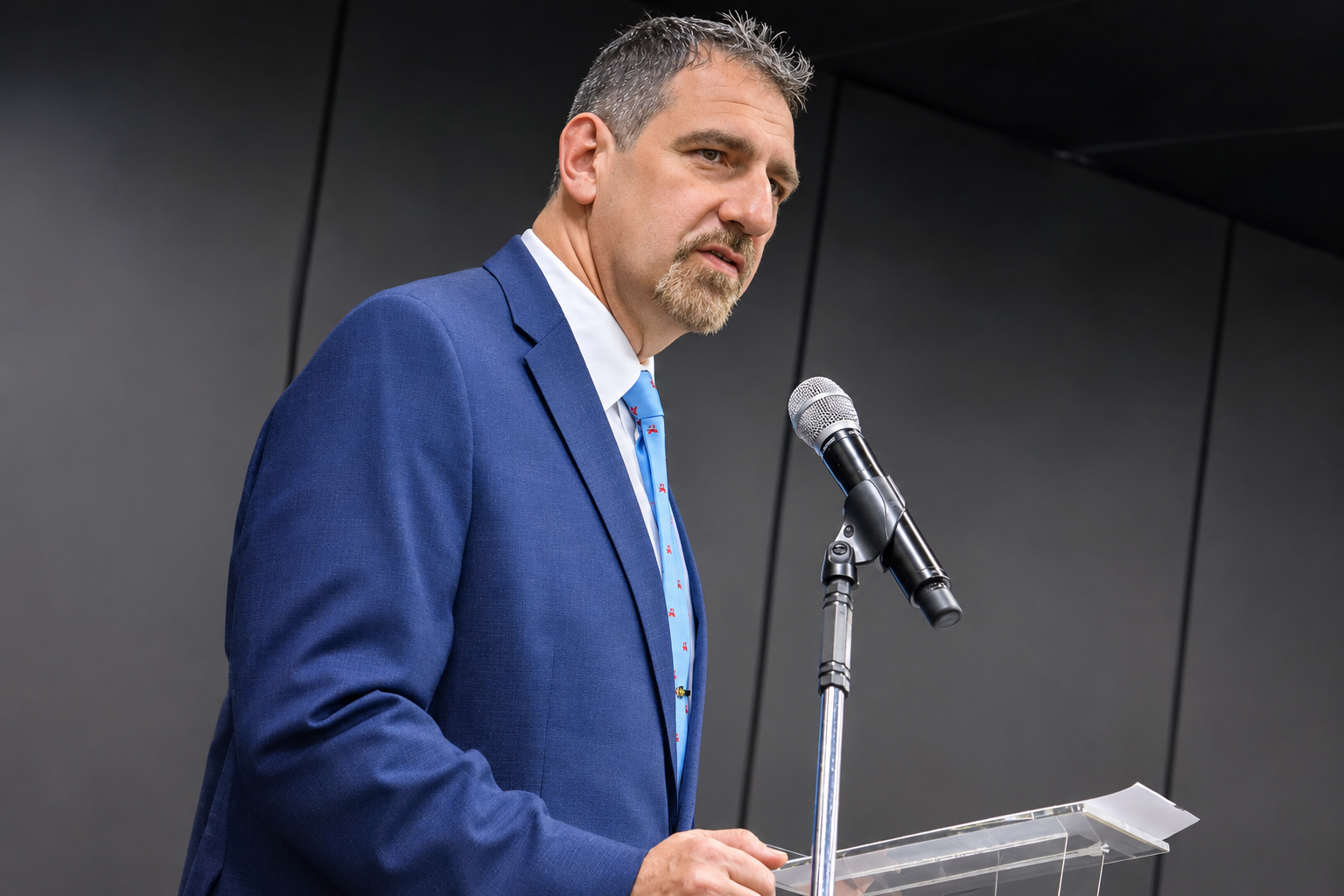
Alexander Dannias – Municipal Secretary of Administration and Human Resources Management at Poços de Caldas, Minas Gerais, Brazil
Participation in the Smart City Expo World Congress 2026 in Barcelona was undertaken at no cost to the Municipality of Poços de Caldas